The thousands of viruses living in your gut
https://www.cell.com/cell/fulltext/S0092-8674(21)00072-6Scientists identify more than 140 000 virus species in the human gut, of which more than half have never been seen before
Summary
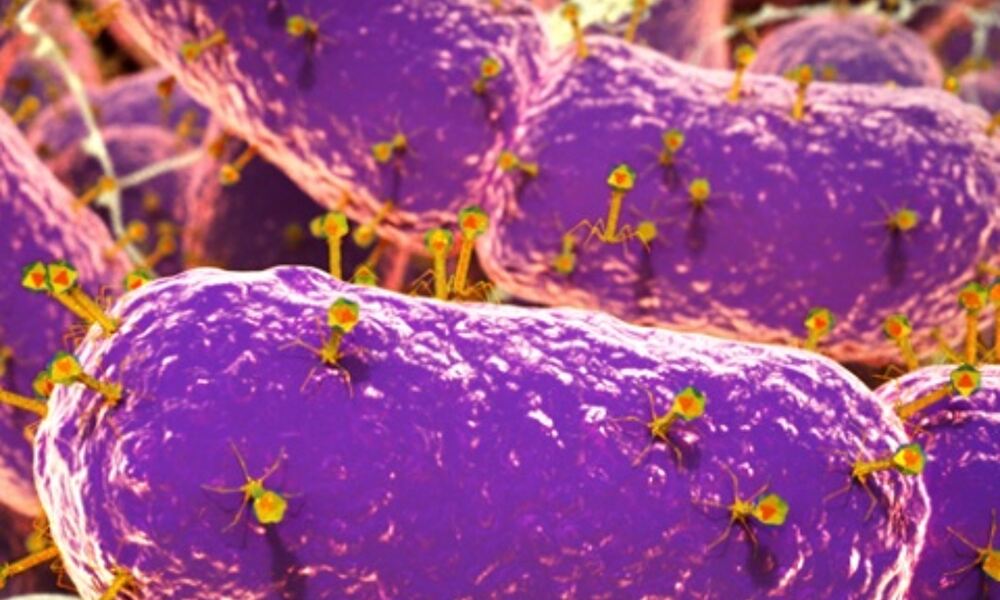
- The human gut is an incredibly biodiverse environment, housing hundreds of thousands of viruses called bacteriophages, which can infect bacteria
- Researchers have now identified more than 140 000 viruses living in the human gut, including a highly prevalent group of viruses that have never been seen before
- The work opens up new research avenues to understand how human health and disease are affected by viruses that live in the gut
18 February, Cambridge – Viruses are the most numerous biological entities on the planet, and many of them live in the human body, including the gut. Until now, little was known about such viruses, but with the help of a DNA-sequencing method called metagenomics, researchers at the Wellcome Sanger Institute and EMBL’s European Bioinformatics Institute (EMBL-EBI) have identified over 140 000 viral species living in the human gut. This study opens up new research avenues for understanding how viruses living in the gut affect human health.
Unexpected diversity
The paper, published in Cell, contains an analysis of over 28 000 gut microbiome samples collected in different parts of the world. The aim was to explore and catalogue the biodiversity of the viral species found in the human gut. The number and diversity of the viruses the researchers found was surprisingly high.
“It’s important to remember that not all viruses are harmful, but represent an integral component of the gut ecosystem,” explains Alexandre Almeida, Postdoctoral Fellow at EMBL-EBI and the Wellcome Sanger Institute. “For one thing, most of the viruses we found have DNA as their genetic material, which is different from the pathogens most people know, such as SARS-CoV-2 or Zika, which are RNA viruses. Secondly, these samples came mainly from healthy individuals who didn’t share any specific diseases. It’s fascinating to see how many unknown species live in our gut, and to try and unravel the link between them and human health.”
“An important aspect of our work was to ensure that the reconstructed viral genomes were of the highest quality,” explains Luis F. Camarillo-Guerrero, PhD student at the Wellcome Sanger Institute. “A stringent quality control pipeline coupled with a machine learning approach enabled us to mitigate contamination and obtain highly complete viral genomes. High-quality viral genomes pave the way to better understand what role viruses play in our gut microbiome, including the discovery of new treatments such as antimicrobials from bacteriophage origin.”
A new and highly prevalent virus species
Among the tens of thousands of viruses discovered, a new highly prevalent clade – or group of viruses believed to have a common ancestor – was identified, which the authors refer to as the Gubaphage. This was found to be the second most prevalent virus clade in the human gut, after the crAssphage, which was discovered in 2014.
Both of these viruses seem to infect similar types of human gut bacteria, but without further research it’s very difficult to know the exact functions of the newly discovered Gubaphage.
“Bacteriophage research is currently experiencing a renaissance. This high-quality, large-scale catalogue of human gut viruses comes at the right time to serve as a blueprint to guide ecological and evolutionary analysis in future virome studies” concludes Trevor Lawley, Group Leader at the Wellcome Sanger Institute.
The metagenomics analysis was done in Rob Finn’s research group at EMBL-EBI and the data resulting from this study is hosted by EMBL-EBI in the Gut Phage Database.
Source article
CAMARILLO-GUERRERO, L.F., et al. (2021). Massive expansion of human gut bacteriophage diversity. Cell. Published online 18 02; DOI: 10.1016/j.cell.2021.01.029
Edit