Unpacking embryonic pluripotency
Research from EMBL-EBI and the University of Cambridge shines a light on the pathways that give rise to pluripotent cells in rodents and primates. The findings have implications for reprogramming and in vitro fertilisation.
- Map of gene expression in mouse and marmoset embryos defines common origins of pluripotency in mammalian development;
- Study identifies specific pathways critical for early lineage segregation in the primate;
- Findings have implications for optimising methods to isolate pluripotent stem cells, to reprogram cells to pluripotency, or to improve human embryo culture.
Cambridge, UK, 9 November 2015 – Researchers at EMBL’s European Bioinformatics Institute (EMBL-EBI) and the Wellcome Trust–Medical Research Council Cambridge Stem Cell Institute at the University of Cambridge have identified factors that spark the formation of pluripotent cells. Their findings, published in Developmental Cell, shed light on human embryonic development and help research into cell reprogramming and assisted conception.
Embryonic stem cells are widely known for their ability to differentiate into any cell type – a state called pluripotency. This state is short lived in the embryo, but is essential to normal development. In this study, the researchers mapped when and where genes were expressed (turned on or off) during early development of the mouse and common marmoset, a nonhuman primate species. This allowed them to pinpoint changes that regulate pluripotency in both mammals. They analysed the complex network of gene regulation that supports pluripotency, looking closely at how this network comes together and later collapses as cells exit the pluripotent state to become specialised cell types.
“Our goal was to generate a comprehensive map of gene expression in the early stages of embryogenesis in the mouse, which has traditionally been the best model for mammalian development, and to see how that knowledge could be translated to primates,” explains Paul Bertone, former EMBL-EBI group leader now at the Wellcome Trust–MRC Stem Cell Institute.
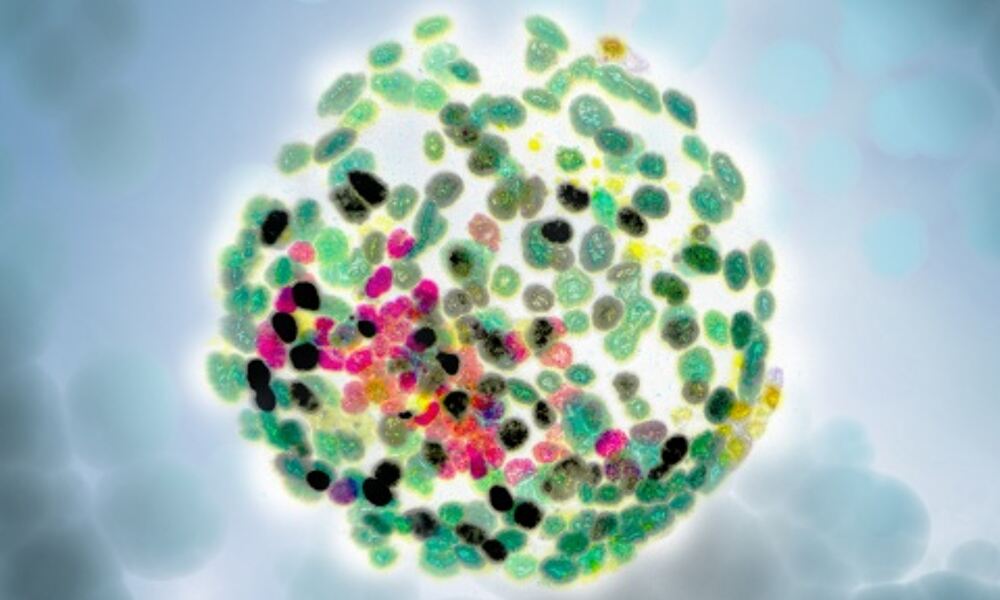
To compare pluripotent cells in rodents and primates, the researchers used single-cell RNA sequencing on small clusters of cells (8-20 cells) to establish precise gene-expression patterns for specific stages of early development. The results provide a framework for understanding the emergence and progression of pluripotency in different mammals.
“Many of the genes that give rise to the pluripotent identity in mice were also expressed in marmoset, demonstrating a common foundation for pluripotency in mammals,” says Austin Smith, also of the Stem Cell Institute. “But there were some differences in signalling pathways between the two species, indicating that lineage specification in primates is not entirely conserved.”
“We found that WNT signalling in the marmoset is critical for normal differentiation of one of the first three cell lineages to emerge,” Paul continues. “Inhibiting this pathway has a profound effect – one of those lineages is subsumed by pluripotent cells rather than forming correctly. It will be interesting to see through in vitro studies whether WNT and perhaps other pathways are similarly utilised in humans.”
This highly interdisciplinary study blends traditional embryology, genomics and bioinformatics. The result is a valuable resource for identifying the factors and pathways that regulate pluripotency in different mammals. The findings can also be used to optimise embryonic stem-cell derivation, and reprogramming to pluripotency, in cell cultures. The knowledge gained helps researchers understand early lineage decisions in embryonic cells, potentially leading to improved methods for human blastocyst development for assisted conception.
Source article
Boroviak T, et al. (2015) Lineage-Specific Profiling Delineates the Emergence and Progression of Naive Pluripotency in Mammalian Embryogenesis. Developmental Cell (in press); published online 9 November. DOI: 10.1016/j.devcel.2015.10.011
About the Wellcome Trust–Medical Research Council Cambridge Stem Cell Institute
The Wellcome Trust-Medical Research Council Cambridge Stem Cell Institute was officially established on 1st July 2012, and is supported by a strategic funding partnership between the Wellcome Trust and the Medical Research Council. Our vision is to build a deep understanding of stem cell biology for the prevention and treatment of human disease. SCI research themes correspond to the major stem cell types: pluripotent stem cells, haematopoietic stem cells, neural stem cells and epithelial and solid tissue stem cells. There are currently 25 mainstream stem cell laboratories comprising more than 300 group members.
About EMBL-EBI
The European Bioinformatics Institute (EMBL-EBI) helps scientists realise the potential of ‘big data’ in biology, helping them exploit complex information to make discoveries that benefit mankind. We manage the world’s public biological data and make it freely available to the scientific community via a range of services and tools, perform basic research and provide professional training in bioinformatics. We are part of the European Molecular Biology Laboratory (EMBL), a non-profit, intergovernmental organisation funded by 21 member states and two associate member states. Our 570 staff represent 57 nationalities, and we welcome a regular stream of visiting scientists throughout the year. We are located on the Wellcome Genome Campus in Hinxton, Cambridge in the United Kingdom.
Edit