Monitoring antimicrobial resistance using sewage samples
Comprehensive analysis of sewage samples collected in 60 countries offers global view of antimicrobial-resistant bacteria
Summary
- Study shows that wastewater can be a good indicator of the levels of antimicrobial-resistant bacteria present in a city or region, with potential to become part of a monitoring strategy in the effort to tackle antimicrobial resistance
- Interesting correlations are seen between resistance and socio-economic, health and environmental factors
- Researchers also establish a convention for describing and presenting data from wastewater monitoring, to allow reuse and integration with future surveillance studies using the same methodologies
March 13, Cambridge – An international study, led by the Technical University of Denmark and involving EMBL’s European Bioinformatics Institute (EMBL-EBI), has shown that sewage can reveal the occurrence of antimicrobial resistant bacteria around the world. The researchers collected and analysed wastewater samples from 74 cities in 60 countries.
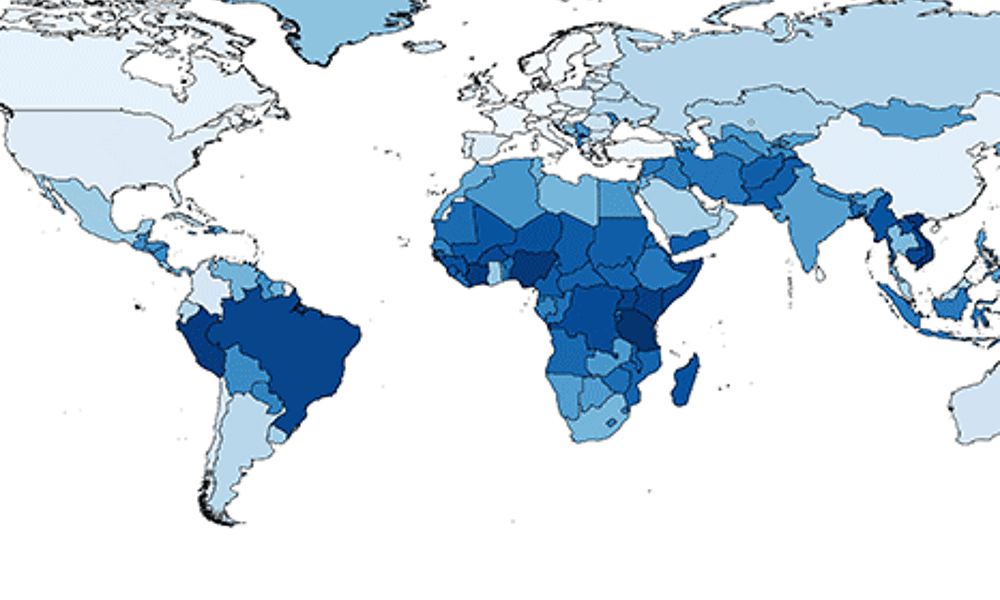
This metagenomics study mapped out all the DNA material in the sewage samples and found that there are global and regional differences in antimicrobial resistance gene diversity and abundance.
Countries fell into one of two groups: the first one, including countries from North America, Western Europe, Australia and New Zealand, have generally lower levels of antimicrobial resistance; Asia, Africa and South America have generally higher levels of resistance genes.
The study shows that most of the variables that are associated with the occurrence of antimicrobial resistance in a country are correlated with indicators of sanitary conditions and the population’s general state of health.
As part of the study, the researchers also established a convention for describing and presenting data from wastewater monitoring, to allow reuse and integration with future surveillance studies using the same methodologies.
“In developing sewage sampling as a means of understanding resistance patterns, we had a very purposeful data strategy,” explains Guy Cochrane, Head of the European Nucleotide Archive at EMBL-EBI, whose team coordinated data within the study. ”In the study, we establish a convention for describing and presenting sewage data that will allow their fullest reuse.
"Data reuse might include scenarios where newly discovered resistance genes not known at the time of the study can be investigated in urban populations, and integration with future data from further sampling sites.”
The dataset is available through EMBL-EBI’s ENA, as Study PRJEB27054.
Read the full press release on the DTU news website.
Source articles
HENDRIKSEN, R.S., et al. (2019). Global monitoring of antimicrobial resistance based on metagenomics analyses of urban sewage. Nature Communications. Published online 08 03; DOI: 10.1038/s41467-019-08853-3
Funding
The study was funded through grants from the Novo Nordisk Foundation, the Velux Foundation and via the EU-funded project COMPARE. Several COMPARE partners participated in the study.