
Adaptive evolution of mammalian immunity and metabolism
New study maps positively selected sites across mammalian proteins to identify evolutionary changes in metabolic enzymes
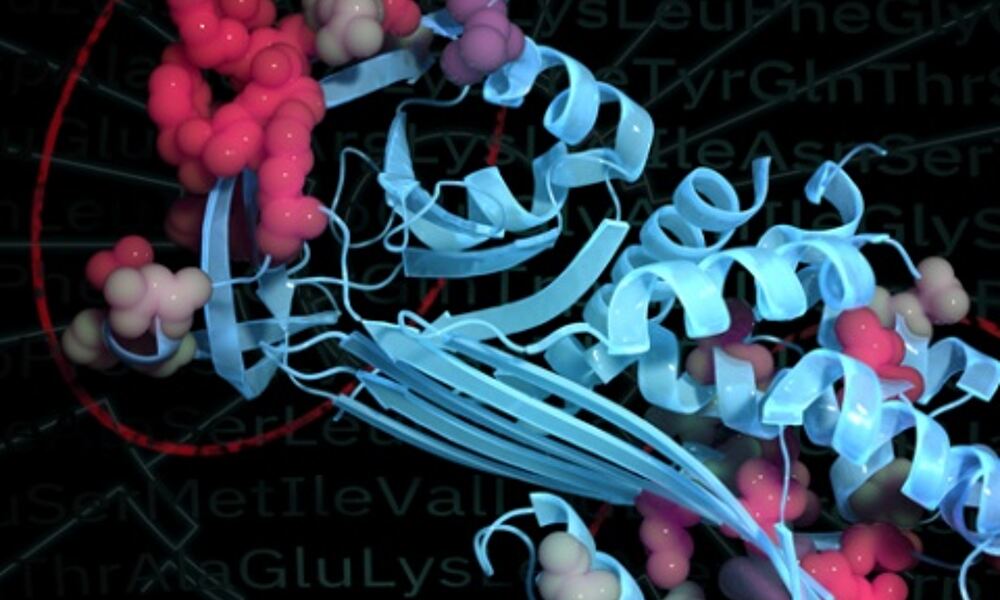
Summary
- Scientists have identified adaptive evolutionary changes occurring in clustered amino acid sites within functional regions of immune response and metabolic enzymes
- The research creates a database of over one million structurally mapped amino acid sites in 3347 3D mammalian protein structures
- The work demonstrates that mammalian evolution is shaped by environmental pressures such as exposure to pathogens and toxins
3 March 2020, Cambridge – Researchers at EMBL’s European Bioinformatics Institute (EMBL-EBI) have published a study investigating the molecular evolution of amino acid sites across mammalian proteins. They show that clusters of positively selected sites are commonly found in two functional protein groups: immune response proteins and metabolic enzymes.
All species evolve dynamically over many generations to adapt to changes in their environment. An important question for scientists today is how these environmental changes drive adaptations at a molecular level. Due to advances in genomic sequencing and protein structure data, new methods can be devised to help fill this gap in our understanding of evolution.
This research, published in PNAS, combines genetic sequence and 3D structural information about proteins to analyse evolutionary patterns of over one million amino acid sites across 3347 mammalian proteins. The results from this study demonstrate that exposures to chemical substances or pathogens shape evolutionary changes in the enzymes responsible for their metabolism or recognition, so these exposures are strong drivers of mammalian adaptation.
Key terms
Evolution: Adaptive changes to organisms over many generations
Molecular evolution: Changes to DNA, RNA, or proteins across generations
Adaptation: Changing to become better suited to an environment
Positive selection: Increase in advantageous genetic variants over time
Clusters: Groups of amino acid sites in close proximity within a protein
Insights from 3D protein structures
“What has not been done before is to look at these sites in their 3D protein structures,” says Nick Goldman, Group Leader and Head of Research at EMBL-EBI. “This study methodically goes through the genome to detect adapting sites and then looks to see if these cluster in a three-dimensional protein structure.”
Cross-comparing open access data from EMBL-EBI’s Ensembl Compara and PDBe databases gave the researchers a clear picture of which proteins were evolving adaptively. They mapped individual site changes within the protein structure to reveal statistically significant clustering of positively selected amino acid sites. Further investigation using the Mechanism and Catalytic Site Atlas (M-CSA) revealed that many of these clusters are positioned within the active site of the proteins.
Rapid evolution of immune response and metabolic enzymes
The proteins identified as having the highest rate of evolutionary adaption were firstly those involved in immunity such as receptors responsible for pathogen recognition. Previous studies have shown this link; here, however, the researchers could also detect these rapidly adapting sites within enzymes responsible for toxin and drug metabolism. This provides strong evidence for the shaping of mammalian evolution by environmental pressures such as exposure to pathogens and drugs.
“Adaptive changes are well established in immunity genes but we also found similar molecular changes for toxin metabolism, which hasn’t previously been considered as a major selective pressure,” says Greg Slodkowicz, who initiated this research while a PhD student at EMBL-EBI and who is now a Postdoctoral Researcher at the MRC Laboratory of Molecular Biology. “As species evolve over time, they encounter different toxins in the environment, and they need to adapt in order to survive. We can detect signatures of this process in their genomes.”
SLODKOWICZ, G., et al. (2020). Integrated structural and evolutionary analysis reveals common mechanisms underlying adaptive evolution in mammals. PNAS. Published online 03 03; DOI: 10.1073/pnas.1916786117