A workflow for marine genomic data analysis
International effort set to develop standards and analysis for marine genomics data
Summary
-
Profiling the microbial communities living in our oceans has the potential to transform our understanding of these ecosystems
-
A new project funded by EOSC-Life aims to create a workflow for analysing data from marine genomic observatories
-
The project will make standardised data rapidly available to the marine biological community
8 June, Cambridge – Profiling microbial communities that live in marine environments has the potential to transform our understanding of these ecosystems. Moreover, microbiome diversity is directly correlated with environmental quality through the food chain and the physical and chemical effects of secondary metabolites. Many of the latter provide targets for bioprospecting in medicine and industry.
Using metagenomics to profile marine microbial communities requires a robust data analysis workflow.
The EOSC-Life Consortium has awarded funding to a new project entitled ‘A workflow for marine Genomic Observatories data analysis’. The project will be led by the Hellenic Centre for Marine Research (HCMR), a partner of the European Marine Biological Resource Centre (EMBRC). HCMR will lead the newly-funded project in collaboration with EMBL’s European Bioinformatics Institute (EMBL-EBI), and EMBRC Portugal partner Centro de Ciências do Mar (CCMAR).
Exploring marine microbes
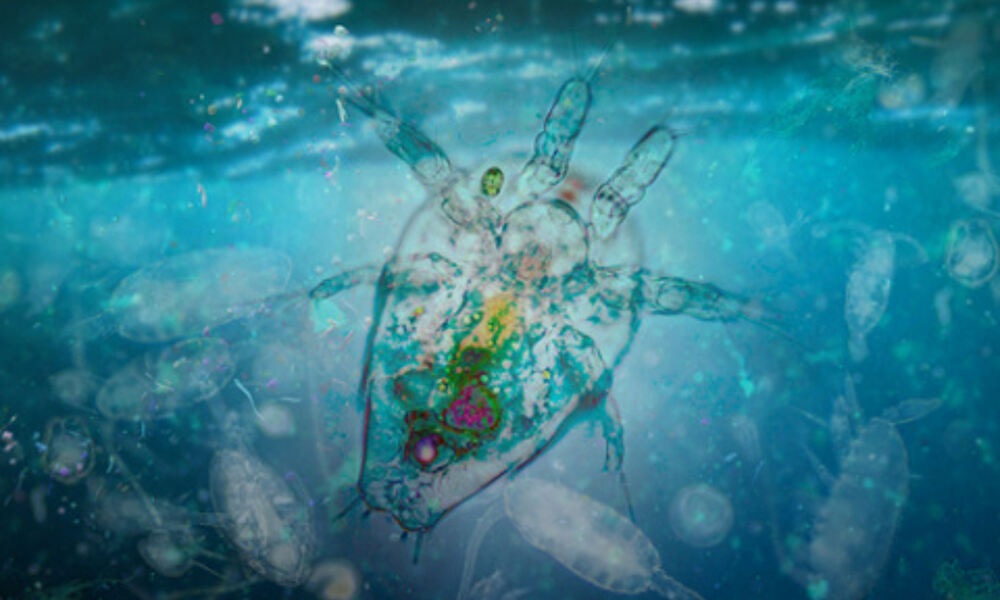
The participating institutions in this new project bring a wealth of experience and capacity to metagenome analysis. Ocean Sampling Day, an initiative led by HCMR as part of the H2020-funded, EMBRC-led ‘ASSEMBLE Plus’ project, Malaspina, and Tara Oceans projects, as well as EMBRC’s forthcoming European Marine Omics Biodiversity Observation Network (EMO BON), have been designed to collect environmental samples for metagenomic analysis.
This metagenomic analysis aims to elucidate the taxonomic profile and functional potential of marine communities. It is hoped that this will greatly increase our understanding of the importance of microbial communities in some of the most sensitive and threatened marine environments.
Collecting reliable data
However, the success of existing and future efforts ultimately depends on the development and adoption of standards for sampling, metadata collection, sequencing, and data analysis. Without such consistency, comparisons of results among sites and over time will be compromised and much of the value of the data lost for ecosystem analysis and the monitoring of environmental quality.
The newly funded project will design an effective workflow and deployment strategy for the analysis of the metagenomic genomic observatory data. It is considered of great importance that the data and preliminary results are made available rapidly to the marine biological community, but also that the data are quality controlled and standardised before release.
“My team at EMBL-EBI will play an important role providing portable analysis components to be used in this project to construct a simplified metagenomic analysis pipeline ,” says Rob Finn, Team Leader of Microbiome Informatics at EMBL-EBI. “Formally described this new pipeline in a standard format [the Common Workflow Language] will allow us to capture the results and integrate them with the outputs from the more extensive pipelines provided by MGnify.”
The proposed work is aimed at making the large volumes of data produced by the GOs more easily interpretable by the marine biological community by providing the taxonomic inventories of each sample in a timely manner and in a non-technical format. This way, researchers without the technical expertise to analyse such data on their own, as well as policy makers and management agencies, will have the opportunity to inspect the results and understand the biodiversity patterns that are being shaped by the marine microbial communities.
Find out more
Read the full press release on the HCMR website.
Partners in this project include: Flanders Marine Institute (VLIZ, EMBRC Belgium), Plentzia Marine Station, University of the Basque Country (PiE-UPV/EHU, EMBRC Spain), Station Biologique de Roscoff (SBR, EMBRC France) and Stazione Zoologica Anton Dohrn (SZN, EMBRC Italy).