The Leverhulme Centre for the Holobiont: driving biodiversity and agriculture research
The £10m Leverhulme Centre for the Holobiont aims to create a Green Revolution in agriculture, rescue threatened species, and restore habitats
Summary
- The Leverhulme Centre for the Holobiont is a multi-disciplinary research network led by researchers across Imperial College London and nine other institutions including EMBL’s European Bioinformatics Institute
- This centre has received a £10 million Leverhulme Research Centre grant to fund its work over the next 10 years
- Holobiont research can further our understanding of many societal challenges in areas of global importance including agriculture and biodiversity
11 January 2022, Cambridge – One of this year’s £10 million Leverhulme Research Centre grants has been awarded to fund the Leverhulme Centre for the Holobiont.
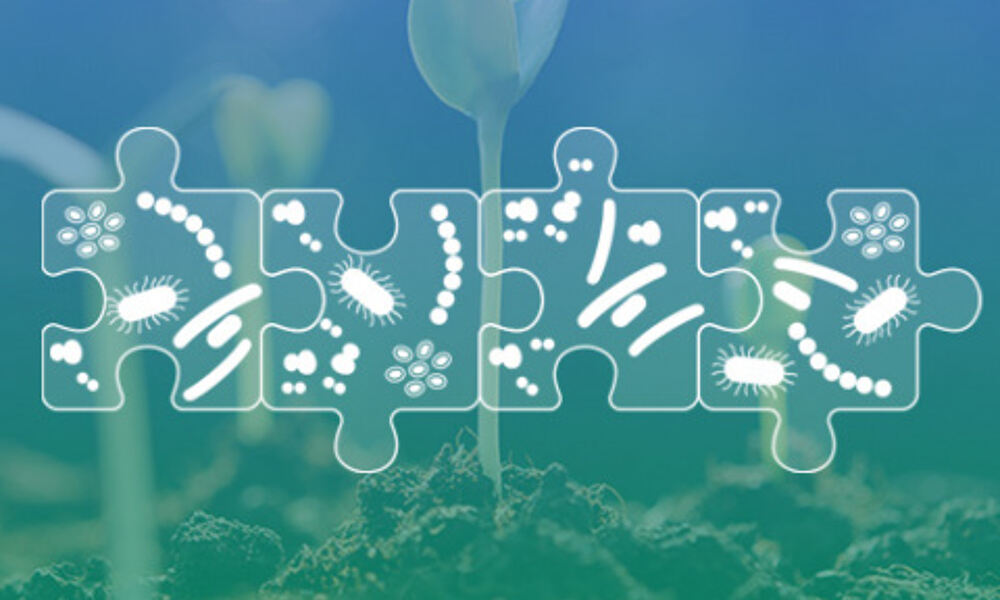
Holobiont is a collective term for a host organism and the variety of other species that live on, near or within it, jointly forming an ecological unit. Many of these microbial communities – often called microbiomes – are relied upon by the host organism, for example the ‘good bacteria’ that live in our guts and keep us healthy.
The Leverhulme Centre for the Holobiont, which has been awarded funding over ten years by the Leverhulme Trust, is led by a network of researchers across ten institutions, including Imperial College London and EMBL's European Bioinformatics Institute (EMBL-EBI).
A holobiont ‘tree of life’
“There is growing recognition that microbes are essential for life, including providing protection against disease, and that the combination of organism and their microbes should be thought of as systems – a holobiont – rather than as individual entities in isolation” said Thomas Bell, Director of the new centre, based at Imperial College London.
“Given how essential these systems are, by understanding how organisms and microbes support one another we can manipulate the relationship to save species from extinction, grow crops more efficiently, and a host of other applications we can’t predict,” continued Bell.
The centre’s vision is to first map the associations between microbes and higher organisms, creating a holobiont ‘tree of life’. This will track which microbes live with which hosts and highlight patterns across nature. The researchers in the centre will use this starting point to answer applied questions in biology, agriculture, and sustainability.
Holobionts and biodiversity research
Better understanding of holobionts could help address declines in biodiversity. For example, animals in zoos may lose some of their associated microbes, and restoring them could help when reintroducing them to the wild to boost biodiversity.
Other threats to wild organisms are a direct result of variation to their microbiomes. Coral bleaching and the death of large populations of coral can be triggered by high temperatures that cause essential microbes to disassociate from the coral host, causing substantial disruption to the local marine ecosystem.
Working towards a Green Revolution
The holobiont research funded by this new grant aims to support a sustainable Green Revolution in agriculture. Plants combine with microbes to form unique holobionts, largely through cooperative microbes in their roots that take in nutrients from the surrounding soil and pass them to the plant. Mapping these holobionts could help researchers manipulate them, creating crops that pull more nutrients in, reducing fertiliser use, or that are better able to resist pathogens, reducing pesticide use.
“We’re extremely excited to have received this funding from the Leverhulme Trust,” said Rob Finn, Group Leader at EMBL-EBI. “It’s going to open up many new opportunities for us to build multi-disciplinary collaborations with a wide variety of researchers from molecular biologists to bioengineers. We will be able to pull from a great many areas of expertise to further our understanding of how a holobiont is formed and maintained and how this may be leveraged to address societal challenges from biodiversity to greener agriculture.”
This press release was originally published on the Imperial College London website.
The Leverhulme Research Centres grant 2021
The new Holobiont centre is one of three new centres funded by the Leverhulme Trust. The competition was designed to encourage original research that would establish or reshape a significant field of study and transform our understanding of an important topic in contemporary societies.
The Leverhulme Centre of the Holobiont research partners
The Centre for the Holobiont grew out of the cross-faculty Microbiome Network at Imperial, and includes partners at the Wellcome Sanger Institute, EMBL’s European Bioinformatics Institute (EMBL-EBI), the Natural History Museum, Royal Botanic Gardens, Kew, CABI, the Rosalind Franklin Institute, the Mary Lyon Centre, ZSL London Zoo, and the Tara Oceans Consortium.